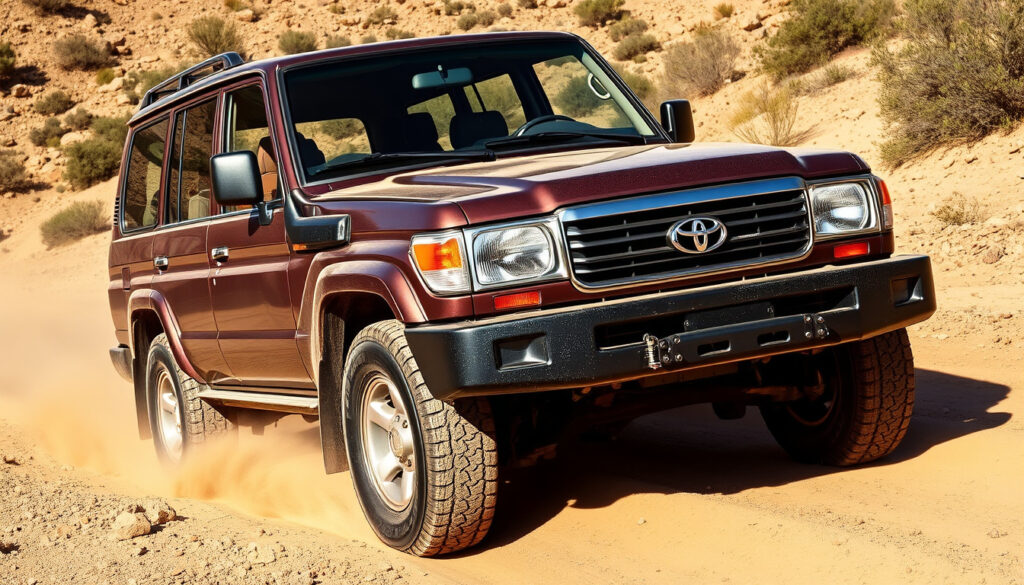
100 Series Land Cruiser: Years, Problems, and Best Models
Some cars earn a following because of nostalgia, but the 100 Series Land Cruiser earned its reputation by outlasting everything thrown at it. If you’re shopping for a used SUV that can handle daily errands and remote overland trips without flinching, this Toyota flagship is the benchmark.
Production years: 1998–2007 ·
Engine options: 4.7L V8 petrol (2UZ-FE), 4.2L diesel (1HD-FTE) ·
Body style: 5-door station wagon ·
Replaced model: 80 Series ·
Successor model: 200 Series
Quick snapshot
- Production: 1998 to 2007 (Adios (overlanding resource))
- Engine options: 4.7L 2UZ-FE V8, 4.2L 1HD-FTE diesel (Autotrader (automotive marketplace))
- Body style: 5-door station wagon (Autotrader) (Adios (overlanding resource))
- Exact worst model year without official recall data (Autotrader)
- Which specific year is definitively the most reliable – multiple opinions exist (Adios)
- Production began in 1998 for the 1999 model year (Autotrader)
- Facelift and 5-speed auto introduced in 2003 (Adios)
- Production ended in 2007; succeeded by 200 Series in 2008 (Autotrader)
- Prices for clean 100 Series continue rising as overland demand grows (Adios) (YouTube (enthusiast comparison))
- Aftermarket support remains strong for the 2UZ-FE and 1HD-FTE platforms (YouTube (enthusiast comparison))
Six specifications that define the 100 Series Land Cruiser, from its powertrain to its weight.
| Specification | Value |
|---|---|
| Years produced | 1998–2007 |
| Engine (petrol) | 4.7L 2UZ-FE V8, 230–275 hp |
| Engine (diesel) | 4.2L 1HD-FTE inline-6, 202 hp |
| Transmission | 4-speed auto (early), 5-speed auto (late) |
| Drivetrain | Full-time 4WD with locking center diff |
| Curb weight | Around 5,200–5,500 lbs |
What year is a 100 series Land Cruiser?
What is the model year range of the 100 series?
- The 100 Series Land Cruiser was produced from 1998 to 2007 (Autotrader).
- It was introduced for the 1999 model year (Adios).
The 100 Series replaced the 80 Series in 1998 and was succeeded by the 200 Series for the 2008 model year. This means any 100 Series on sale today is at least 17 years old — a key point for buyers weighing age against proven longevity.
When did production start and end?
Production started in 1998 and ended in 2007 (Autotrader). The model run was exactly one decade.
The implication: the later years (2003–2007) received mid-cycle updates, including a 5-speed automatic transmission and improved electronics, making them the more refined choice for daily driving.
The pattern: model-year refinements mean the later trucks command a premium, but the early trucks still deliver legendary durability at a lower entry price.
What are the years to avoid for a Toyota Land Cruiser?
Which model years have known transmission issues?
The 4-speed automatic in early 100 Series (1998–2002) is generally bulletproof, but the AHC (Active Height Control) suspension fitted to many early models is a known weak point. Some buyers recommend avoiding early 100 Series models (1998–2000) specifically due to AHC complexity and higher failure rates (Autotrader).
What suspension problems affect early 100 series models?
- AHC system leaks and failing accumulators are common on 1998–2000 models (Adios).
- Repair costs can exceed $2,000 if the system needs full replacement.
Are there any specific years with rust concerns?
Rust is more prevalent on 100 Series models from 1998–2007 sold in salt-belt regions, but no specific year stands out as a structural problem (Autotrader).
The catch: the 200 Series also suffers from frame rust, so this isn’t unique to the 100.
What are the common problems with the LC 100?
What issues affect the 2UZ-FE V8 engine?
- Cracked exhaust manifolds are a common issue on 2UZ-FE engines (Adios).
- Oil leaks from the valve cover gaskets and oil pan can develop as mileage climbs (Autotrader).
- Radiator failure is reported on higher-mileage examples, especially where the original plastic tank radiator hasn’t been replaced.
How reliable is the AHC suspension system?
The AHC suspension is the single most expensive system to repair. Leaking hydraulic lines and failing height sensors are documented, and the system is complex (Adios). Many owners convert to a conventional coil-over setup once the AHC fails.
What electrical problems are common?
- Dashboard cracking is a cosmetic but persistent issue across all model years.
- Some owners report faulty window regulators and worn seat switch contacts.
What this means: the 2UZ-FE powertrain is legendary for longevity, but the ancillary systems — especially AHC — demand attention on higher-mileage examples.
The 100 Series offers a simpler electronics suite than the 200 Series, which reduces potential failure points but sacrifices modern conveniences. For overlanders, that’s often an advantage.
The implication: budget for an AHC inspection before purchase, and plan for a possible conversion to conventional suspension if the system shows signs of wear.
Which year is the most reliable Toyota Land Cruiser?
What makes the 2003–2007 models more reliable?
- Later models (2003–2007) receive fewer complaints about AHC and electronics (Autotrader).
- The 5-speed automatic transmission in 2003+ models provides smoother operation and better highway fuel economy.
Are later model years better than earlier ones?
Generally yes. The 2003 facelift brought interior updates and improved build quality for the AHC system. However, the earlier 1998–2002 models with the 4-speed auto are still highly regarded for their simplicity — fewer electronics mean fewer electrical failures.
What engine is considered most durable in the 100 series?
The 2UZ-FE petrol V8 is known for exceeding 300,000 miles with proper maintenance (Adios). The 1HD-FTE diesel is also praised for longevity, especially in Australian and European markets, but is less common in North America.
The pattern: later model years (2003–2007) with either the 2UZ-FE petrol or 1HD-FTE diesel deliver the best combination of reliability and everyday usability.
Is the Land Cruiser 100 or 200 better?
What are the key differences between the 100 and 200 series?
Seven differences that separate the two generations, each with a clear trade-off.
| Feature | 100 Series | 200 Series |
|---|---|---|
| Production years | 1998–2007 | 2008–2021 |
| Engine (petrol) | 4.7L 2UZ-FE V8 | 5.7L 3UR-FE V8 |
| Towing capacity | 6,500 lbs (Autotrader) | 8,100 lbs (Autotrader) |
| Drivetrain | Full-time 4WD, locking center diff, optional rear locker | Full-time 4WD, electronic off-road aids (Crawl Control, KDSS) |
| Off-road hardware | Simpler, rugged; rear locker available | Electronic aids; no locking rear diff (Autotrader) |
| Maintenance cost | Simpler, cheaper upkeep (Adios) | More complex electronics, higher parts cost |
| Rust concerns | Prone to rust (Autotrader) | Frame and suspension rust reported (Autotrader) |
Which series has better off-road capability?
The 100 Series with a locking rear differential is arguably more capable in extreme terrain because its systems are simpler and less likely to fail. The 200 Series compensates with electronic crawls and KDSS, which improve articulation but add complexity.
How does reliability compare between the two?
- Both are highly reliable, but the 100 Series has a lower purchase price and simpler electronics (Adios).
- The 200 Series offers more modern features and a bigger V8 engine (3UR-FE).
The trade-off: for daily driving and towing, the 200 Series wins. For overlanding and long-term ownership with lower maintenance, the 100 Series remains the enthusiast’s choice.
Upsides and downsides of the 100 Series
Upsides
- Proven reliability that can exceed 400,000 km with care (Adios)
- Simpler electronics lead to lower maintenance costs (Autotrader)
- Excellent off-road capability with locking diff option
- Strong aftermarket and community support
Downsides
- AHC suspension repairs are costly (Adios)
- Fuel economy is poor (12–16 mpg combined)
- Rust can be an issue on older models (Autotrader)
- Dated interior and safety features compared to the 200 Series
The implication: the 100 Series rewards owners who value mechanical durability over modern convenience, but demands a realistic budget for age-related repairs.
Timeline: 100 Series Land Cruiser
- 1998: Production of 100 Series begins; released as 1999 model (Autotrader).
- 2003: Minor facelift and interior updates; 5-speed automatic introduced in some markets (Adios).
- 2007: Production ends; succeeded by 200 Series for 2008 model year (Autotrader).
The pattern: each milestone reflects Toyota’s incremental improvement strategy, with the 2003 update marking the biggest leap in drivability.
What’s confirmed and what’s unclear about the 100 Series
Confirmed facts
- Production years: 1998–2007 (Autotrader)
- Engine options: 2UZ-FE V8 petrol, 1HD-FTE diesel (Autotrader)
- Body style: 5-door wagon (Autotrader)
- The 100 Series replaced the 80 Series (Autotrader).
- AHC suspension is a common failure point (Adios).
What’s unclear
- Exact years to avoid without specific official recall data.
- Which specific model year is definitively the most reliable – multiple opinions exist.
- Total production numbers vary by source; one estimate suggests ~85,000 units (YouTube).
- Whether the 2UZ-FE can exceed 400,000 km without major issues depends heavily on maintenance history (Adios).
The catch: without centralized recall data, buyers must rely on model-year generalizations and individual vehicle inspection rather than hard-and-fast rules.
What owners and experts say
“The 100 is my favorite, and the one I pick to drive around town most often. These trucks are just the best — modern enough, fantastic visibility.”
Reddit user (r/LandCruisers) in a post titled ‘The 100 Series is the Best Vehicle Ever Made’
“The 100 Series is a better choice for daily driver use compared to the 80 Series or older models.”
Autotrader (automotive marketplace)
Summary: Is the 100 Series Land Cruiser right for you?
The 100 Series Land Cruiser remains the smartest used SUV buy for anyone who values mechanical simplicity, proven longevity, and genuine off-road capability without the complexity of newer platforms. Its AHC suspension is the main financial risk, and later models (2003–2007) offer the best balance of modern features and durability. For the overlander who wants a truck that will still run well when the electronics have given up, the 100 Series is the obvious call. The 200 Series is a more powerful, more comfortable daily driver, but it demands a bigger budget and accepts higher repair complexity. For the buyer in North America looking for a capable, reliable off-roader under $25,000, the choice is clear: target a 2003–2007 100 Series, budget for an AHC inspection, and enjoy a vehicle that will outlast many newer SUVs.
carbuzz.com, forum.ih8mud.com, forum.expeditionportal.com, forum.ih8mud.com
Frequently asked questions
How many miles can a 100 series Land Cruiser last?
With regular maintenance, the 2UZ-FE engine often exceeds 300,000 miles, and many examples have surpassed 400,000 km (Adios).
Is the 100 series Land Cruiser good for off-roading?
Yes. Full-time 4WD, a locking center differential, and available rear locker make it highly capable in tough terrain (Autotrader).
What is the towing capacity of the 100 series Land Cruiser?
The 100 Series can tow up to 6,500 pounds (Autotrader).
Does the 100 series Land Cruiser have a V8 engine?
Yes, the 4.7L 2UZ-FE V8 is the standard petrol engine; a 4.2L inline-6 diesel was also offered in export markets.
What is the fuel economy of the 100 series Land Cruiser?
Typical combined fuel economy is 12–16 mpg, depending on driving conditions and maintenance.
Are replacement parts expensive for the 100 series?
General maintenance parts are affordable, but AHC suspension components and some interior trim can be costly. Overall, parts are cheaper than for the 200 Series (Adios).
What is the price range for a used 100 series Land Cruiser?
Prices vary widely by condition and market: $10,000–$25,000 for decent examples, with low-mileage diesel models commanding premium.
More related posts


